
Goat anti-Mouse IgG (H+L) Secondary Antibody, HRP
Product Details Host Species:GoatReactivity:MouseConcentration:1 mg/mL Clonality:PolyclonalIsotype:IgGConjugate:HRP Formulation:Liquid in PBS containing 50% glycerol, 0.5% BSA and 0.02% sodium azide.
01产品图片
02产品简介
Product Details Host Species:GoatReactivity:MouseConcentration:1 mg/mL Clonality:PolyclonalIsotype:IgGConjugate:HRP Formulation:Liquid in PBS containing 50% glycerol, 0.5% BSA and 0.02% sodium azide.
03产品介绍
Product Details Host Species:GoatReactivity:MouseConcentration:1 mg/mL Clonality:PolyclonalIsotype:IgGConjugate:HRP Formulation:Liquid in PBS containing 50% glycerol, 0.5% BSA and 0.02% sodium azide. Purification:Affinity-chromatography Storage:-20°C,1 year Applications WB 1:1000-1:20000 Information Based on immunoelectrophoresis and/or ELISA, the antibody reacts with whole molecule mouse IgG. It also reacts with the light chains of other mouse immunoglobulins. No antibody was detected against non-immunoglobulin serum proteins. The antibody may cross-react with immunoglobulins from other species. RRIDAB_3676030
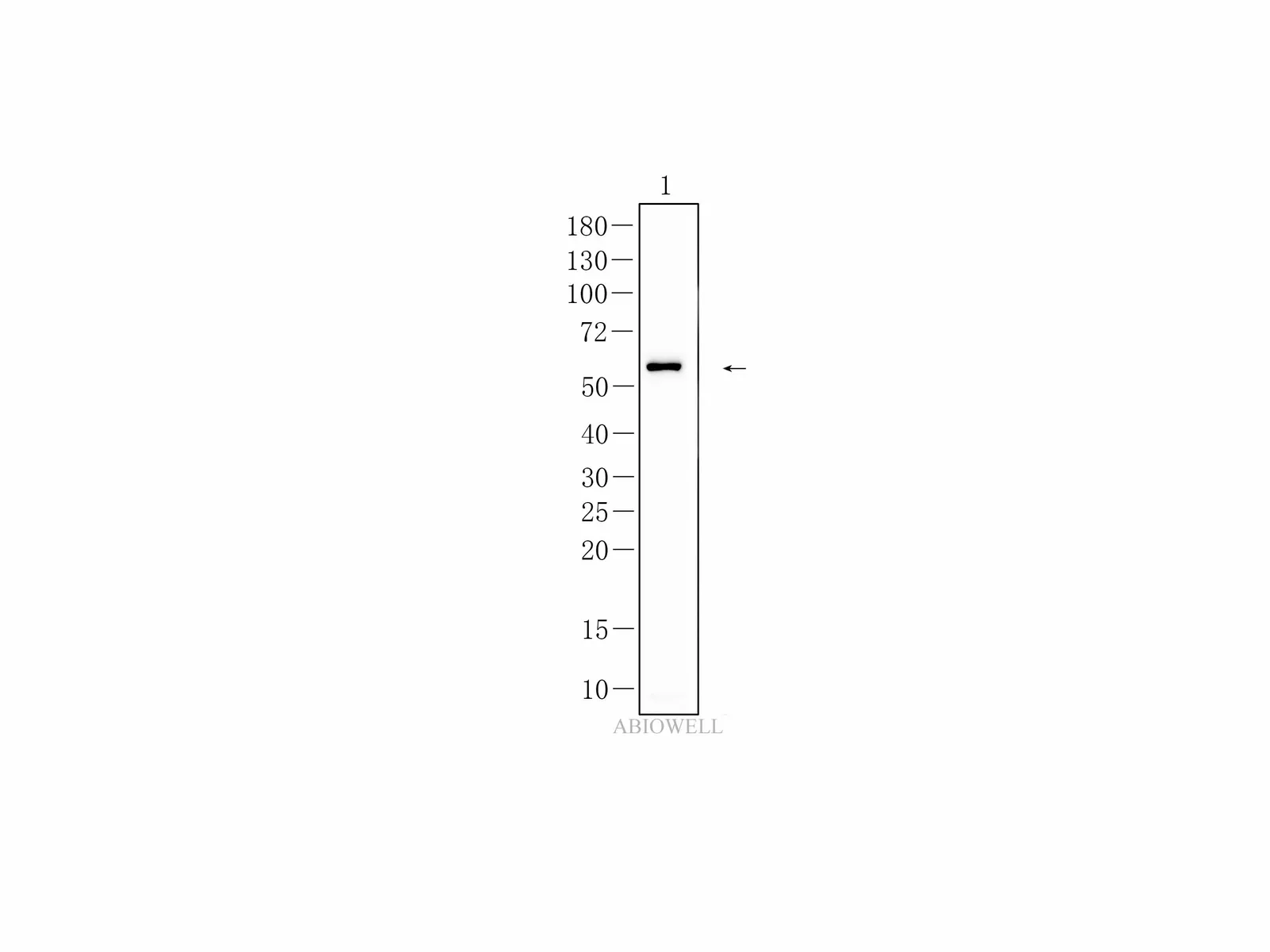
Product images Fig: Goat Anti-Mouse IgG - HRP Secondary Antibody (AWS0001) at 1:5000 dilution was used for 1 hour at room temperature. Positive control: Lane 1: HEK293 cell Fig: Goat Anti-Mouse IgG - HRP Secondary Antibody (AWS0001) at 1:5000 dilution was used for 1 hour at room temperature. Positive control: Lane 1: NRK-49F cell Lane 2: J774A.1 cell Lane 3: ID8 cell Lane 4: MC38 cell Lane 5: GL261 cell Lane 6: HEPA1-6 cell Lane 7: HT1080 cell Fig: Goat Anti-Mouse IgG - HRP Secondary Antibody (AWS0001) at 1:5000 dilution was used for 1 hour at room temperature. Positive control: Lane 1: Jurkat cell Lane 2: NIH/3T3 cell Lane 3: THP-1 cell Lane 4: U251 cell Lane 5: A549 cell Lane 6: C2C12 cell Lane 7: HEPG2 cell Lane 8: HCT-116 cell Lane 9: HUVEC cell Lane 10: LLC cell
认真做好每一个抗体, 每一个抗体都经过反复验证!
Target identification in natural products plays a critical role in the development of innovative drugs. Bufalin, a compound derived from traditional medicines, has shown promising anti-cancer activity; however, its precise molecular mechanism of action remains unclear. Here, we employ artificial intelligence, molecular docking, and molecular dynamics simulations to elucidate the molecular mechanism of Bufalin. Using an integrated multi-predictive strategy, we identify CYP17A1, ESR1, mTOR, AR, and PRKCD as the potential targets of Bufalin. Subsequent validation via surface plasmon resonance, biotin pulldown, and thermal shift assays confirms Bufalin’s direct binding to ESR1, which encodes estrogen receptor alpha (ERα). Molecular docking analyses pinpoint Bufalin’s selective interaction with Arg394 on ERα. Molecular dynamic simulations further show that Bufalin acts as a molecular glue, enhancing the interaction between ERα and the E3 ligase STUB1, thereby promoting proteasomal degradation of ERα. Given the therapeutic potential of ERα degradation in overcoming endocrine resistance, we investigate the inhibitory effect of Bufalin on endocrine-resistant models and prove Bufalin reverses Tamoxifen resistance in vitro, in vivo, and in patient-derived breast cancer organoids from tamoxifen-relapsed cases. Collectively, our findings indicate that Bufalin functions as a molecular glue to degrade ERα, offering a potential therapeutic strategy for reversing Tamoxifen resistance.
Authors:Jiang Shilong, Liu Keyi, Jiang Ting, Li Hui, Wei Xiao, Wan Xiaoya, Zhong Changxin, Gong Rong, Chen Zonglin, Zou Chan, Zhang Qing, Cheng Yan, Cao Dongsheng Authors:Tang Youzhou, Li Yuxin, Yang Xinyu, Lu Tianze, Wang Xinran, Li Zhi, Liu Jun, Wang Jianwen
Identifying novel therapeutic targets and drugs is crucial for treating triple-negative breast cancer (TNBC). Bufalin, a key active ingredient of the traditional Chinese medicine HuaChansu , has been employed in tumor therapy. Here, SPR-LC-MS/MS is employed to characterize the targets of Bufalin and found that serine/threonine kinase 33 (STK33) possesses a strong binding affinity to Bufalin. Combining molecular docking, SPR analysis, and Biotin-pulldown analysis, it is demonstrated that STK33 can bind Bufalin. Notably, STK33 is highly expressed in TNBC and is associated with poor prognosis in TNBC patients. STK33 knockdown inhibits TNBC cell growth both in vitro and in vivo. Mechanistically, STK33 phosphorylates and stabilizes CCAR1, which promotes tumor growth and metastasis, thereby driving tumor progression. Further analyses confirmed that Methionine 245 of STK33 is required for STK33-Bufalin interaction, and Bufalin treatment promotes the degradation of STK33 protein by destroying the STK33-HSP90 complex. Through in vitro, in vivo, and in patient-derived TNBC organoids, it is observed that Bufalin inhibited the TNBC cell proliferation by targeting STK33. This study not only establishes Bufalin as a putative STK33 degrader to suppress TNBC but also identifies STK33 as a pro-cancer factor in TNBC, presenting a potential therapeutic target for TNBC.
Authors:Xiaoxin Yang, Chang Li, Mengjun Ge, Xiaoying Li, Wei Zhao, Hu Guo, Hemin Nie, Jun Liu
Inflammatory macrophages (M1 macrophages) and interleukin-1β (IL-1β) serve as critical mediators of inflammatory response and antimicrobial defense in the immune system. Our preliminary investigation identified the HEAT repeat protein (maestro heat-like repeat family member 7, MROH7) as a potential regulator of IL-1β; however, its function in macrophages remains unexplored. In this study, we demonstrated that MROH7 inhibits IL-1β production in M1 macrophages. Mechanistically, MROH7 facilitates the acetylation of lipopolysaccharide-binding protein (LBP) through accumulating intracellular arachidonic acid (AA), thereby promoting its degradation and inhibiting the nuclear factor κB (NF-κB) signaling pathway. Additionally, mice with the myeloid depletion of Mroh7 exhibit an aggravated inflammatory response in lipopolysaccharide (LPS)-induced systemic inflammation. In summary, our study establishes MROH7 as a regulator in macrophage-mediated inflammation, providing critical insights into potential therapeutic targets for inflammatory disorders.
Authors:Hangchao Zhang, Jian Fu, Yan Guo, Shijie Liu, Xuehua Mei, Xiu Zeng, Wenkai Ren Authors:Chang-chuan Bai, Jing-yuan Zhang, Jing-ru Shen, Ping Wang, Xiao-jie Li, Cheng Liu, Yi-xin Yang, Yan-na Liu, Ming-mei Liao, Hai-yu Xu, Yan-qiong Zhang
Increasing investigations indicate that neurotransmitters shape immune cell function; however, current results about glycine (Gly) in inflammatory macrophage responses are conflicting. Here, we found that Gly transporters support interleukin-1β (IL-1β) production in inflammatory macrophages, while Gly receptors inhibit it. Inflammatory macrophages have higher expression of Gly transporter 1 (GlyT1; also known as SLC6A9). Notably, SLC6A9 inhibition leads to extracellular accumulation of Gly and limits IL-1β production in inflammatory macrophages. Mechanically, extracellular Gly suppresses phosphatidylinositol 3-kinase (PI3K)/protein kinase B (AKT1)/mammalian target of rapamycin (mTOR) signaling through the Gly receptor alpha-4 (Glrα4), thereby inhibiting activation of the NOD-like receptor 3 (NLRP3) inflammasome and IL-1β production. Furthermore, Gly supplementation or myeloid-specific SLC6A9 depletion alleviates the lipopolysaccharide (LPS)-induced inflammatory response in vivo . Collectively, our findings reveal a previously uncharacterized mechanism for the Gly-ergic system in regulating inflammatory macrophage function, providing a potential alleviating target for macrophage-associated diseases.
相关资料下载:说明书(.pdf)(点击从官网下载)
04完整参数表
参数由厂商资料整理,采购前请以最终报价单与技术协议为准。
05荣誉与资质
该品牌暂未上传荣誉证书与资质文件。以下是平台可核验的公开信息,未上传项如实标注,不做推断。
- 营业执照未上传
- 品牌授权未上传
- 产品检测报告未上传
- 会员身份
- 收费会员
- 经营身份
- 原厂
- 成立年份
- 2016 年
- 所在地
- 湖南
- 收录条目
- 498 个
- 平台核验
- 平台代管
06品牌与供应商
公司产品涵盖抗体、细胞、培养基、质粒载体等多个领域,致力于为生命科学研究提供可靠的工具与解决方案。自创立以来,艾碧维始终秉持“求实、诚挚、勤勉、克己”的发展理念,坚持以自主研发与持续创新为核心动力。公司拥有百余人的团队,其中硕士及以上学历生物医学专业人才占比超过30%,包括博士4人,构建起一支结构合理、专业扎实的研发与服务队伍。通过设立研发部、生产部、市场与营销部、财务部等多功能部门,公司实现了从产品开发到市场推广的全流程管控。艾碧维不仅敢于质疑现状,积极为生命科学家突破技术壁垒提供支撑,更注重与客户的深度互动与合作,通过持续收集反馈、开展研发协作,提前预见并解决潜在问题。未来,公司将继续秉持“助力科研创新,让实验更简单”的使命,一步一个脚印地打造具有国际领先水平的技术研发与产业化平台,为全球生命科学领域的进步持续赋能。注意: 1.本公司产品仅供科研使用。
品牌资料由厂商公开信息与授权渠道核对整理;条目参数与价格以最终报价单为准。
07同类条目
同一子类内的条目才具备可比性。跨子类比较参数通常没有意义。
08同品牌其他条目
艾碧维 在本目录共 498 个条目,除本条外还有:
科研在线(TeleVM). Goat anti-Mouse IgG (H+L) Secondary Antibody, HRP(AWS0001)[EB/OL]. 产品目录, 2026-10-31. https://www.suprotek.cn/products/item/goat-anti-mouse-igg-h-l-secondary-antibody-hrp.html.
TeleVM. (2026, October 31). Goat anti-Mouse IgG (H+L) Secondary Antibody, HRP(AWS0001). 产品目录. https://www.suprotek.cn/products/item/goat-anti-mouse-igg-h-l-secondary-antibody-hrp.html
@misc{biocsp_item_goat_anti_mouse_igg_h_l_secondary_antibody_hrp,
  title        = {Goat anti-Mouse IgG (H+L) Secondary Antibody, HRP(AWS0001)},
  author       = {{科研在线}},
  year         = {2026},
  howpublished = {产品目录},
  note         = {更新于 2026-10-31,产品目录},
  url          = {https://www.suprotek.cn/products/item/goat-anti-mouse-igg-h-l-secondary-antibody-hrp.html}
}
GB/T 7714 用于中文论文与报告;APA 7 用于英文期刊;BibTeX 可直接导入 Zotero、EndNote 或 LaTeX。
许可:CC BY-NC 4.0 · 转载注明来源